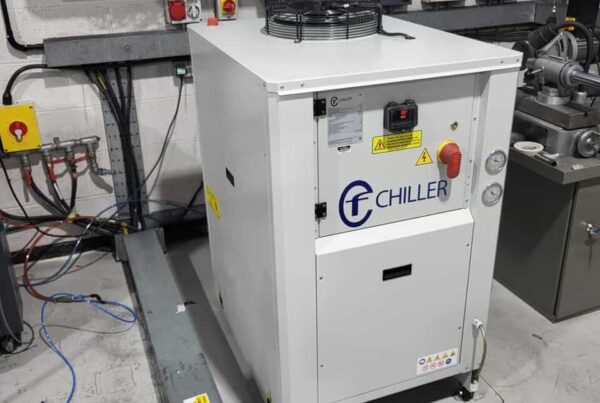

Cold UK air is free energy. If you run air cooled chillers, dry coolers or adiabatic units, winter is your window to slash compressor run hours, reduce kWh consumption and extend plant life. With the right valves, glycol concentration and controls, you can let ambient air do most of the work while your compressors idle. This guide explains what free cooling is, how to set sensible changeover points, the difference between partial and full free cooling, how to integrate it with existing plant, where the savings come from, and the pitfalls to avoid before the first frost.
In this guide you’ll learn:
-
When free cooling triggers and how to set changeover points
-
How to achieve partial and full free cooling
-
Typical winter energy savings
-
How to integrate free cooling with existing plant
-
Common mistakes to avoid
What free cooling is and how it works
Free cooling uses low ambient air to reject heat from your process fluid without relying on mechanical refrigeration. Instead of evaporating refrigerant in a circuit driven by compressors, you pass the return fluid from process loads through a free cooling coil or a dry cooler and shed heat straight to atmosphere. The chiller’s compressors can stage down, then off, when the coil or cooler can meet the load.
- Air cooled chillers with integrated free cooling coils: a water or glycol loop passes through a coil in front of the condenser section. Ambient air across that coil precools the fluid before it enters the evaporator.
- Standalone dry coolers: a separate heat exchanger uses ambient air to cool the loop. The chiller sits on standby and starts only when needed.
- Adiabatic coolers: pads wet the incoming air to drop its dry bulb via evaporative assist, giving deeper cooling at higher ambients while using a modest amount of water with drift controls and hygiene measures.
Is free cooling better than mechanical cooling? In winter, yes, on energy and wear. Fans and small pumps draw a fraction of the power required by compressors. You still need mechanical cooling for shoulder days and warm seasons, but free cooling dramatically reduces run hours in cold weather and extends compressor life.
Temperature setpoints that make free cooling pay
What is the free cooling setpoint? It is the ambient threshold where your control system begins to open the free cooling path and unload compressors. A practical approach for UK sites is to start partial free cooling when ambient is 2 to 5 Celsius below process return temperature, then target full free cooling as the ambient approaches your required leaving-fluid temperature plus a small margin for approach across the coil.
- Typical process leaving-fluid setpoints: 6 to 12 Celsius for comfort cooling and many general process loops. Some processes run hotter, 12 to 20 Celsius, which widens the free cooling window.
- Rule of thumb for changeover: if you want 10 Celsius leaving-fluid and your coil has a 3 to 5 Celsius approach, you are likely to achieve partial free cooling below 12 to 14 Celsius ambient and full free cooling below 6 to 8 Celsius ambient, depending on flow, surface area and fan speed.
What is the best setpoint for chillers? It is the lowest stable leaving-fluid temperature your process genuinely needs. Raising the chiller setpoint by 1 to 2 Celsius often has minimal process impact and can unlock many more hours of free cooling with lower fan energy and reduced frosting risk. For data and close control environments, coordinate with CRAC controls to widen deadbands and exploit economiser hours safely.
Partial vs full free cooling
- Partial free cooling: the free cooling coil or dry cooler removes some of the load, so compressors run at reduced capacity. Controls modulate 3-way valves and fan speeds to maximise ambient heat rejection first.
- Full free cooling: the ambient system covers the entire load. Compressors remain off and only pumps and fans operate.
The control strategy should be automatic and smooth. Use ambient-compensated changeover, modulating valves with feedback from leaving-fluid temperature, and variable-speed fans. Avoid bang-bang control that short cycles valves and starts compressors repeatedly.
Energy Impact, Pump Sizing, and Capacity Derate
Glycol changes how a system behaves. Expect:
- Higher viscosity
- Higher pump head
- Slightly lower heat transfer efficiency
- Reduced chiller capacity at the same setpoint
- Potential low flow alarms if winter viscosity isn’t calculated properly
When sizing pumps or recommissioning systems:
- Recalculate flow and head for the glycol mix
- Check NPSH and motor kW
- Confirm the pump has winter headroom
- Consider VSD control
Poorly sized pumps are one of the biggest causes of alarms and nuisance shutdowns during the first cold snap.
Maintenance Schedule and Testing
There’s no fixed replacement interval; condition dictates timing, not a calendar.
Solid programme:
- Test glycol twice per year: pre-winter and pre-summer
- Check concentration using a refractometer (ensure it’s calibrated for the right glycol type)
- Test pH and inhibitor levels
- Monitor microbiological activity
- Carry out partial refresh every 3-5 years in clean systems
- Replace fully if inhibitors can’t be stabilised or metals are rising in lab results
Corrosion issues are almost always caused by neglected inhibitor levels or incorrect top-ups.
Common Glycol Problems and What the Alarm Actually Means
- Low flow alarms in winter: viscosity has increased; pump duty not estimated correctly
- Slush forming in coils/plates: setpoints too close to freeze protection margin
- High dp across the plate HX: corrosion debris or fouling
- Unstable pH: incompatible glycols mixed or inhibitors depleted
- Dilution: topping up leaks with water removes inhibitors even if freeze point looks OK
Control strategies that work in the real world
To make free cooling seamless you will need:
- Accurate sensors: reliable ambient, return, and leaving-fluid sensors, correctly placed and calibrated.
- Glycol protection: correct concentration matched to design minimum ambient, with a verified freeze margin. Poor glycol control risks frozen coils and split pipework.
- Valving that actually diverts: 3-way mixing or diverting valves sized for your flow, with end switches or position feedback to confirm movement.
- Fan speed control: VSDs on cooler fans to match approach temperature and reduce noise and energy.
- BMS integration: staged changeover, alarm visibility, and seasonal schedules aligned to production hours.
Are chillers used in winter? Yes. Even with a well tuned free cooling system, your chiller remains the safety net. It should auto start if ambient rises, if approach widens due to fouling, or if your process demands a tighter setpoint than the air side can provide at that moment.
Typical savings you can expect
Real savings depend on load profile, setpoint, coil size and local weather. As a guide for UK mainland sites:
- 30 to 60 percent reduction in compressor run hours across December to February for processes targeting 8 to 12 Celsius leaving-fluid.
- 15 to 35 percent annual kWh reduction on mixed-load plants with robust winter free cooling and shoulder season assist.
- Payback on retrofitted coils or standalone dry coolers can be 12 to 36 months where winter duty is significant and electricity tariffs are high.
You also reduce wear on compressors, contactors and starters. Maintenance spend tends to shift toward fan drives and coil hygiene, which is usually cheaper than compressor overhauls.
Choosing The Right Path With Evolution Cooling
Real-World Costs to Plan For
- Initial fill volume plus spare drums
- Pumping energy increase
- Slight capacity derate
- Semiannual testing
- Inhibitor dosing
- Occasional filtration
- Eventual partial or full refresh
The biggest saving comes from preventing freeze-ups. One burst coil can cost more than years of proper glycol management.
Practical Specification Checklist
- Confirm lowest fluid temperature anywhere in the loop
- Select type of glycol and concentration
- Add 3°C to 5°C safety margin
- Verify materials compatibility
- Recalculate pump duty for cold conditions
- Consider derate impact on chiller capacity
- Plan testing and dosing schedule
- Ensure safe handling, spill kits, and disposal routes
Next Steps and Support
If you want your system protected for winter, we can test your glycol mix, confirm freeze margins, optimise pumps for winter duties, and calibrate your controls.
Book your glycol health check and winterisation service now.
📞 0121 820 8946
📧 [email protected]
🌐 www.evolution-cooling.com