F-Gas Compliance for Industrial Chiller Operators

Call 0121 820 8946Book a compliance checkLeak check calculator

If you operate a chiller containing fluorinated refrigerant, the legal duty to have it leak checked and to keep records sits with you, not with your contractor.

Evolution Cooling is REFCOM F-Gas certificated. We carry out leak checks, keep your records straight and build the whole obligation into your maintenance schedule so nothing gets missed.

Who Is Responsible? The Operator, Not the Engineer

Under the F-Gas Regulations, the “operator” is the business with real control over the equipment, which in practice is usually the site that owns or runs the chiller. The operator is responsible for making sure leak checks happen at the right intervals, that certified engineers carry out the work, that leaks are repaired and rechecked, and that records exist and are kept.

Using a certified contractor does not transfer the duty. It does mean the work is done properly and the records exist if you are audited. Full details are on GOV.UK, and rules can change, so check the current guidance if you are unsure.

How Often Must a Chiller Be Leak Checked?

Leak check frequency is based on the amount of refrigerant in the system, measured in tonnes of CO2 equivalent (tCO2e), not in kilograms. That figure depends on both the charge weight and the refrigerant’s global warming potential, so two chillers with the same charge can fall into different bands.

5 to 50 tCO2e

At least every 12 months

Extended to 24 months where a compliant automatic leak detection system is fitted.

50 to 500 tCO2e

At least every 6 months

Extended to 12 months with a compliant automatic leak detection system.

500 tCO2e and above

At least every 3 months

An automatic leak detection system is required, which extends checks to every 6 months.

Systems below 5 tCO2e, and hermetically sealed systems below 10 tCO2e that are labelled as such, are generally exempt from mandatory leak checking. If you are not sure which band your chillers fall into, we will work it out from the data plate during a site visit.

What Happens During an F-Gas Leak Check

  • Identification of the refrigerant, charge weight and tCO2e for each system
  • Direct or indirect leak detection appropriate to the system, using calibrated equipment
  • Inspection of joints, valves, seals, schrader points and pipework
  • Checks on any automatic leak detection system, where fitted
  • Repair of leaks found, followed by a verification recheck within a month
  • Recording of refrigerant added or recovered
  • Written record for your compliance file

Records You Need to Keep

For each system that requires leak checking, you should hold records covering the quantity and type of refrigerant installed, any added or recovered, who carried out the work and their certification, the dates and results of leak checks, and details of any leaks found and repaired. Records are normally kept for at least five years and must be available if the Environment Agency asks for them (see GOV.UK record keeping guidance).

We keep these records as part of every PPM contract, and we will pick up and continue records started by a previous contractor.

Ageing Refrigerants and Phase-Down

Alongside leak checking, the F-Gas rules restrict the supply and use of high global warming potential refrigerants, and the quantities placed on the market fall over time. In practice, that means refrigerants such as R404A become progressively more expensive and harder to source, and topping up an ageing, leaking system becomes a poor investment compared with replacing it.

If you are operating high-GWP plant, it is worth planning for replacement rather than waiting for a failure. Our guide to repairing, replacing or upgrading a chiller sets out how to weigh it up, and we can quote replacement and installation on low-GWP alternatives.

F-Gas Leak Check Calculator

Enter your refrigerant and charge weight to see the tonnes of CO2 equivalent for that system and how often it must be leak checked. The charge weight and refrigerant type are on the chiller’s data plate.


Guidance only, based on GWP values used in the F-Gas Regulations. Confirm your equipment details and current requirements with us or on GOV.UK before relying on it.

Get Your F-Gas Obligations Under Control

Tell us how many chillers you run and roughly what refrigerant is in them. We will confirm which need leak checking, how often, and what your records should look like.

Call 0121 820 8946


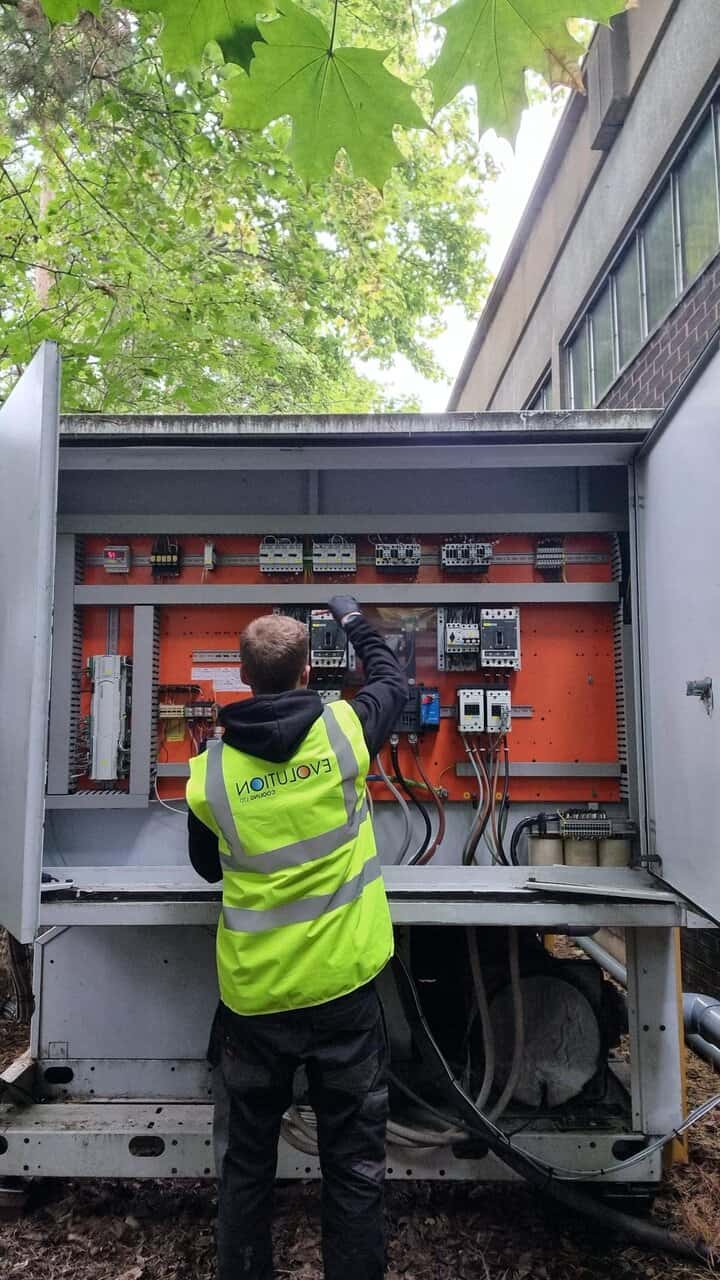
    Technician working on chiller electrical cabinet.

    F-Gas Compliance: Frequently Asked Questions

    The operator, which is normally the business that owns or controls the equipment. Using a certified contractor does not transfer the duty, but it does ensure the work is carried out correctly and the records exist.

    Multiply the refrigerant charge in kilograms by the refrigerant’s global warming potential, then divide by 1,000. The charge and refrigerant type are on the data plate. We will calculate it for each system during a site visit.

    It must be repaired without undue delay and the system rechecked within a month to confirm the repair. The refrigerant added or recovered is recorded. We also look for the root cause, since a recurring leak usually points to vibration, a failed seal or pipework stress.

    Yes. Evolution Cooling is REFCOM F-Gas certificated and refrigerant work is carried out by certified engineers.

    Yes. We pick up your existing records and continue them, so your leak check history stays complete for audits.

    Yes. F-Gas leak checks and record keeping are built into our PPM plans, scheduled at the correct interval for each system.