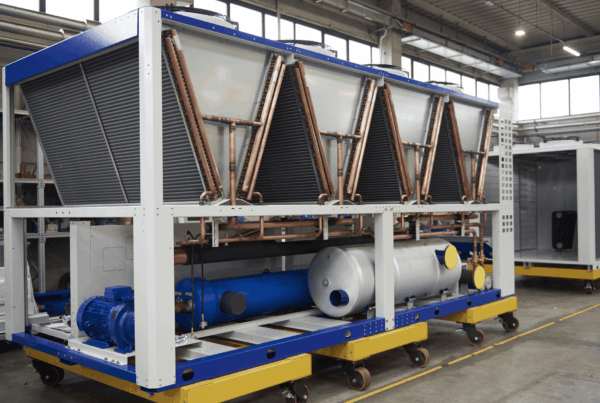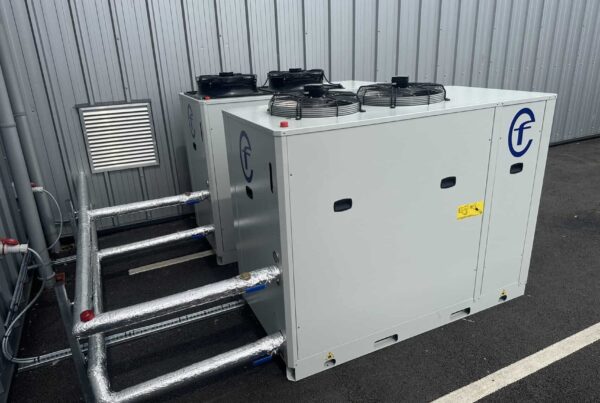
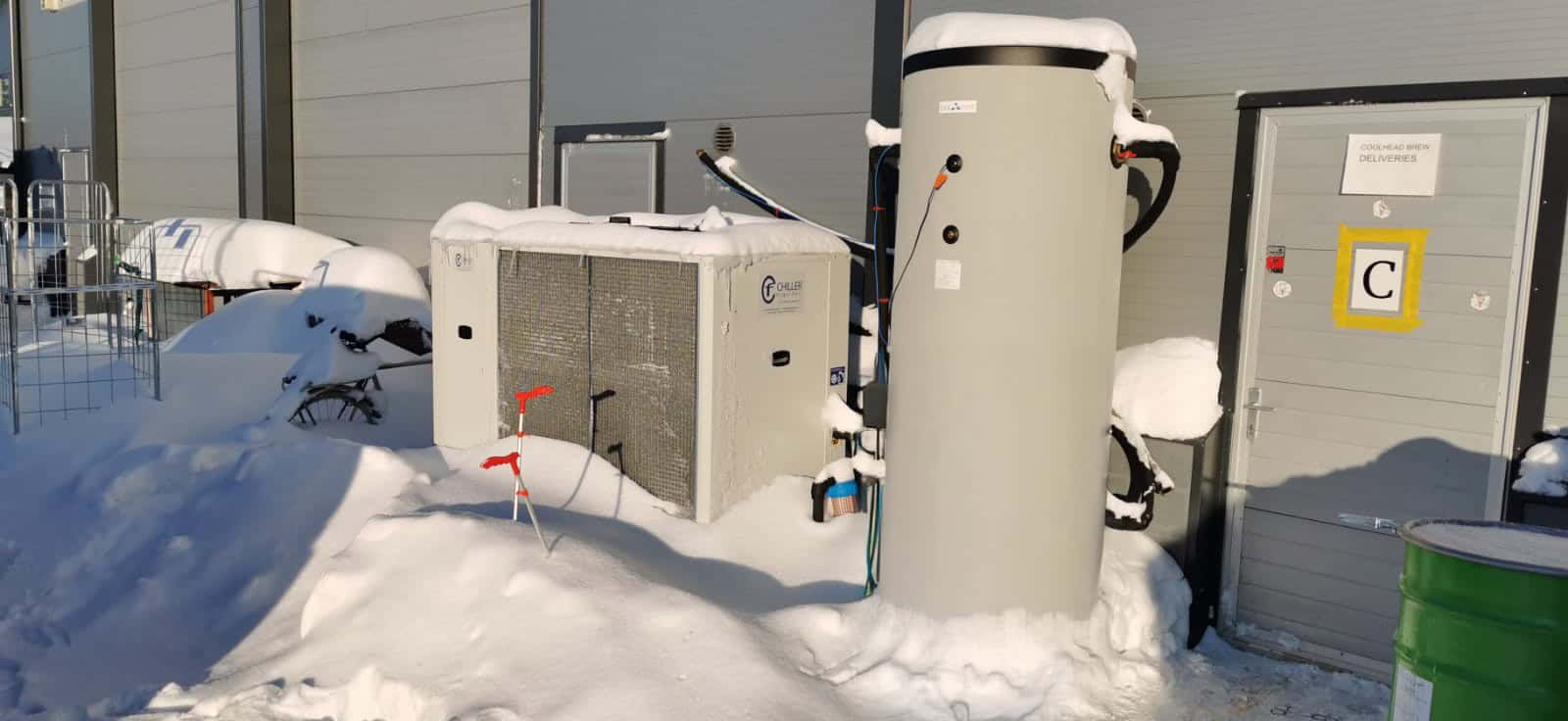
Glycol keeps cooling circuits moving when the weather turns cold. If your plant has outdoor pipework, dry air coolers, free cooling coils or any winter operation, it is not a nice-to-have. The wrong concentration or poor control can create slush, trip pumps on low flow and leave plate heat exchangers starved just when you need reliability most.
This guide sets out when glycol is essential, how to choose the right concentration and inhibitor package, what to watch in pump and heat exchanger selection, and the commissioning checkpoints that prevent seasonal surprises. It applies to process loops and comfort cooling circuits that face low ambient exposure.
Evolution Cooling’s engineers, based in Oldbury in the West Midlands, specify, commission and maintain glycol-protected systems for manufacturing and process sites across the Midlands and beyond. The aim here is practical advice you can use before the next cold season.
Technically reviewed by Anthony Casey, Service Director and co-founder of Evolution Cooling, with 23 years’ experience in industrial refrigeration. Last reviewed September 2026.
Quick answer
Most UK sites with outdoor pipework, dry coolers or free cooling coils need around 30% inhibited propylene glycol (freeze point about -13°C). Set the concentration to protect against whichever is colder, the lowest ambient temperature or the lowest leaving-fluid temperature, plus a 3 to 5°C safety margin. Test concentration and pH at least twice a year.
In this guide
- What is a glycol cooling system?
- When do you need glycol instead of water?
- What concentration do you need?
- HACCP and food-safe glycol
- How glycol affects pumps and plate heat exchangers
- Commissioning checkpoints
- Control strategy and free cooling changeover
- Planned checks and seasonal PPM
- Typical concentrations by sector
- Common glycol problems and what the alarm means
- Real-world costs and a specification checklist
- Frequently asked questions
What Is a Glycol Cooling System?
A glycol cooling system is a chilled-water circuit that uses a water and glycol mixture as the heat transfer fluid. The glycol lowers the freezing point, and the inhibitor package in a proper HVAC-grade product protects mixed-metal circuits against corrosion. Typical applications include outdoor glycol chillers, free cooling coils, dry air coolers, adiabatic coolers and plate heat exchanger interfaces where one side must stay liquid in sub-zero conditions. For a broader introduction to how cooling equipment works, see our essential chiller overview.
Two glycols are common: monoethylene glycol (MEG) and monopropylene glycol (MPG). For most UK food and beverage, commercial and light industrial sites, inhibited propylene glycol is preferred because of its lower toxicity and its suitability where incidental food contact is possible. Ethylene glycol remains a valid choice in sealed industrial loops with no product contact risk, but demands stricter handling controls. For a direct comparison, read our guide to monopropylene glycol vs monoethylene glycol. Whichever you use, choose an inhibited product designed for HVAC duty and never mix chemistries.
When Do You Need Glycol Instead of Water?
UK winters are variable, but sub-zero nights are routine. Water-only circuits with any part exposed to outdoor air, including dry coolers, rooftop pipework and free cooling coils, are vulnerable to slush and ice in pipework, coils and strainers. Partial freezing creates uneven pressure drop, restricts flow and triggers nuisance low-flow and low-pressure alarms. In the worst case it splits coils and heat exchangers.
Glycol provides:
- Freeze protection, with margin for control deadbands and sensor error
- Corrosion inhibition for carbon steel, copper, stainless steel and mixed-metal circuits
- Slush prevention during free cooling and on low-load nights when fluid temperatures sit close to freezing
As a rule of thumb, glycol is needed if any part of the circuit is exposed to sub-zero ambient temperatures, or if the chiller runs at leaving-fluid temperatures below about 5°C, where the evaporator itself is at risk of freezing. For comfort cooling circuits with indoor-only distribution and a managed winter shutdown, water may be acceptable, but check every exposure point, bypass and drain-down provision before deciding. If a cold-weather fault does strike, our emergency breakdown service can help.
What Concentration of Glycol Do You Need?
The right concentration is set by whichever is colder: the lowest ambient temperature any part of the circuit will see, or the lowest leaving-fluid temperature the chiller is set to run at. Add a safety margin of 3 to 5°C below that figure to cover sensor tolerance, control deadbands and unusually cold nights.
For outdoor dry coolers, free cooling coils and exposed pipework, it is usually the ambient exposure that governs, not the chiller setpoint. For low-temperature process loops, it is usually the leaving-fluid setpoint.
Approximate freeze points for inhibited propylene glycol (by volume):
| Concentration | Approx. freeze point | Typical use |
|---|---|---|
| 20% | -7°C | Minimum practical level for corrosion inhibition; limited frost protection |
| 25% | -10°C | Sheltered or lightly exposed circuits |
| 30% | -13°C | Outdoor pipework and dry coolers on most UK sites |
| 35% | -17°C | Exposed rooftop plant, free cooling coils, colder locations |
| 40% | -21°C | Low-temperature process loops; check pump and heat exchanger sizing for viscosity |
Figures vary slightly between products. Always confirm against your glycol supplier’s own concentration chart, and remember that higher concentrations reduce heat transfer and increase pumping energy, so more is not automatically better. For typical concentrations by sector, see the sector guidance below.
Inhibitor management
Inhibitor management matters as much as concentration. Use a fully formulated, inhibited glycol suitable for HVAC duty. Keep pH within the supplier’s band, typically 8.0 to 9.5 for propylene-based products, and track reserve alkalinity where specified. Do not mix brands, and do not top up with plain water. If dilution is unavoidable after a repair, restore concentration with the same product and recheck pH and inhibitor reserve before returning to service. If you need support with a glycol circuit, our team handles glycol chiller repairs.

HACCP and Food-Safe Glycol: What You Need to Document
Where circuits pass through production areas or could contact product, as in brewery, food and beverage environments or pharmaceutical and medical facilities, inhibited food-grade propylene glycol supports your HACCP obligations. This should inform product selection from the outset, not be an afterthought.
Keep records of the glycol specification, safety data sheets, and pH and concentration test results, and train site teams on handling, spill response and top-up procedures. Label fill points and storage clearly to prevent cross-contamination. A scheduled PPM plan that logs concentration and pH at each visit provides the audit trail most HACCP schemes expect.
How Does Glycol Affect Pumps and Plate Heat Exchangers?
Glycol raises viscosity, and viscosity rises sharply as fluid temperature falls. The result is higher friction losses in pipework and heat exchangers, reduced heat transfer and higher pump power in winter. Design and commissioning should be based on worst-case winter viscosity, not summer conditions.
- Size pumps for winter. Confirm duty at the coldest expected fluid temperature with the chosen glycol concentration. Check that flow and differential pressure hold at low ambient without overloading pump motors. See our guide to chiller pump failures and fixes if you suspect an existing pump is struggling.
- Recalculate pressure drop. Plate heat exchangers see a noticeable rise in pressure drop with viscous glycol. Select plates for winter flow and approach temperature, and check that strainers and control valves are not bottlenecks at low temperature.
- Expect flow alarms in undersized systems. Many winter chiller flow issues are viscosity problems surfacing. Interim measures such as slightly higher winter setpoints, increased pump speed or valve adjustments can stabilise the plant, but treat them as managed compromises rather than permanent fixes.
Commissioning Checkpoints That Prevent Winter Faults
A disciplined commissioning routine removes most glycol problems. These are the checks our engineers carry out on seasonal starts and new installations:
- Concentration verification with a calibrated refractometer, read against the supplier’s chart for the product in use
- pH and inhibitor condition tests, with results logged and corrective dosing planned if values drift outside the supplier’s band
- Sensor calibration, especially the leaving-fluid probe that drives free cooling, antifreeze and compressor safeties
- Alarm and safety validation: low flow, low-temperature cut-out, antifreeze alarms and pump overloads
- Pump performance at winter viscosity: flow, differential pressure and motor current
- Plate heat exchanger approach temperature at winter setpoints
- Air bleeding and strainer cleaning to avoid false low-flow trips and pump noise
- Control logic review for winter and summer modes, including setpoint reset, free cooling enable thresholds and changeover hysteresis
Control Strategy, Setpoints and Free Cooling Changeover
A good control strategy balances protection, stability and efficiency. Our guide to winter free cooling covers changeover logic in more detail, but the key principles for glycol-protected circuits are:
- Leaving-fluid setpoints. Run the highest leaving-fluid temperature your process can accept. Every degree higher reduces compressor and pump energy and increases the number of hours free cooling can carry the load.
- Freeze margin. Keep the lowest fluid temperature the controls can produce at least 3 to 5°C above the glycol’s freeze point, to protect against sensor drift and transients.
- Free cooling changeover. Use ambient temperature and approach logic rather than a single fixed value. Check valve sequencing, pump speeds and fan control to avoid short cycling in spring and autumn, and confirm that free cooling cannot pull the fluid below the antifreeze cut-out.
- Nuisance alarm avoidance. Review deadbands and delays on low-flow and antifreeze alarms. Slightly wider hysteresis at night can prevent oscillation at light load. If pressure faults appear alongside freeze alarms, treat them as related and investigate together.
Planned Checks and Seasonal PPM
Glycol does not remove the need for care. A planned maintenance programme should include refractometer checks, pH and inhibitor tests, sample logging, pump and valve function tests, and control calibration before the seasons change. Our 12-month PPM checklist for chillers sets out what should be covered across the year, including the seasonal glycol tasks in this guide.
Evolution Cooling’s PPM plans include glycol concentration and inhibitor checks, sensor calibration, free cooling logic and alarm testing, scheduled around your production. If your circuit contains F-Gas refrigerant, see our guide to F-Gas compliance and leak check intervals. For new plant or system changes, our engineers verify concentration, inhibitors, sensor accuracy and safeties at handover.
Typical Glycol Concentrations by Sector
These are typical starting points for propylene glycol. The final figure should always be based on the coldest point in your circuit plus a safety margin, as set out above.
Breweries and distilleries
Typically 25 to 35% for fermentation vessel jackets and crash cooling. Outdoor pipework and overnight free cooling justify the higher end. Food-grade propylene glycol is the norm.
Food and beverage processing
Food-grade propylene glycol is strongly recommended. HACCP requirements and washdown cycles make both freeze protection and product safety critical.
Plastics and injection moulding
Typically 20 to 30%, depending on setpoints and whether the chiller or pipework sits outdoors. Size pumps for winter viscosity.
Data centres
Typically 25 to 35% on free cooling systems, balancing freeze protection against the extra pumping energy and reduced heat transfer that higher concentrations bring.
Common Glycol Problems and What the Alarm Actually Means
- Low-flow alarms in winter: viscosity has risen as the fluid cooled, and the pump was not sized for winter conditions.
- Slush in coils or plate heat exchangers: the setpoint is too close to the freeze point, or the concentration has been diluted.
- High pressure drop across the plate heat exchanger: fouling or corrosion debris, often a sign of depleted inhibitors.
- Unstable pH: incompatible glycols have been mixed or the inhibitors are exhausted.
- Freeze point looks fine but corrosion is appearing: repeated water top-ups have diluted the inhibitors even though the refractometer reading still looks acceptable.
Real-World Costs to Plan For
- Initial fill, plus spare glycol for top-ups
- Higher pumping energy and a small reduction in chiller capacity
- Twice-yearly testing and inhibitor dosing
- Occasional filtration, and a partial or full refresh every few years depending on condition
The biggest saving is avoiding freeze damage. One split coil or plate heat exchanger can cost more than years of proper glycol management.
Glycol specification checklist
- Confirm the lowest fluid and ambient temperature anywhere in the circuit
- Choose the glycol type and concentration, plus a 3 to 5°C safety margin
- Check compatibility with seals, gaskets and every metal in the circuit
- Recalculate pump duty and chiller capacity at winter conditions
- Plan the testing and dosing schedule
- Arrange safe handling, spill kits and disposal routes
Frequently Asked Questions
Can I top up a glycol circuit with plain water after a repair?
Only as a short-term measure. Plain water dilutes both the concentration and the inhibitor reserve. Retest with a refractometer after any top-up and restore the target concentration with the same inhibited product, not a different brand. Mixing chemistries can cause inhibitor deposits and reduce protection. After a significant leak or contamination, our glycol chiller repair team can flush, recharge and recommission the system.
How often should glycol concentration be tested?
At least twice a year: once before winter and once in spring. For systems with regular top-ups, repairs or large temperature swings, quarterly testing is more prudent. Log results with dates so inhibitor depletion is visible early. This is included in our PPM plans.
What glycol percentage do I need for outdoor pipework in the UK?
For most UK sites with outdoor pipework or dry coolers, around 30% propylene glycol by volume (freeze point about -13°C) is a sensible starting point. Exposed rooftop plant or colder locations may justify 35%. Base the final figure on the lowest ambient temperature the circuit will see plus a 3 to 5°C margin, and confirm against your supplier’s chart.
Why are low-flow alarms common in winter even when the pump is running?
Viscosity. Glycol becomes much more viscous as it gets colder, increasing resistance in pipework, strainers and plate heat exchangers. If the system was sized or commissioned at summer conditions only, winter pressure drop can push the pump off its curve and reduce flow below the alarm threshold. See our guide to identifying and resolving chiller flow issues.
Is propylene glycol always the right choice over ethylene glycol?
For most UK commercial and food-related sites, yes: lower toxicity and suitability for food environments make it the default. Ethylene glycol has slightly better heat transfer and a lower freeze point at the same concentration, which can suit sealed industrial loops with no product contact risk. Read our full comparison of monopropylene glycol vs monoethylene glycol.
Next Steps
If your site relies on outdoor circuits, free cooling or winter operation, book a glycol health check before the temperature drops. Our engineers can test concentration and inhibitors, check pump and plate heat exchanger performance at winter conditions and tune controls to prevent nuisance alarms.
For ongoing protection, our PPM plans cover glycol health, seasonal commissioning and alarm testing on a schedule that works around your production. For new or replacement equipment, see our glycol chillers. If a cold-weather fault strikes, call our breakdown line on 0121 820 8946 or see our emergency breakdown service. Where cooling capacity is needed during repairs, temporary cooling can be arranged through our network.