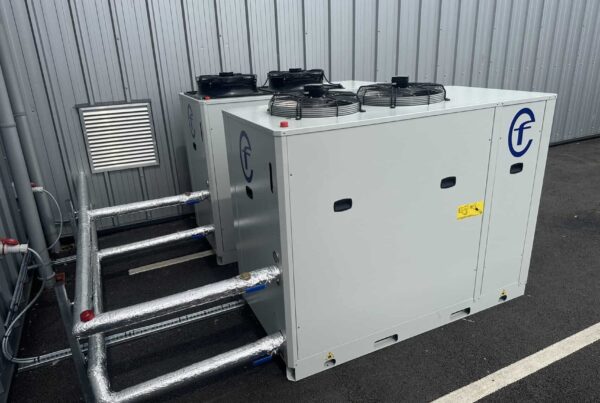

These days, chiller units play a vital role in a wide range of environments, from commercial premises to heavy industrial facilities. But understanding how much they cost to run is not always straightforward. With so many variables at play, from the age and design of the system to how it is used, calculating true running costs requires a deeper look. At Evolution Cooling, we work with businesses to reduce chiller operating costs and minimise long-term overheads through expert servicing and strategic upgrades.
The Main Factors Behind Chiller Running Costs

A number of technical and operational elements combine to influence the cost of running a chiller. While headline figures such as system size or kilowatt rating are a starting point, several real-world variables make a significant difference to annual spend.
Energy consumption is often the largest portion of chiller running costs. How much electricity your unit draws will depend not just on its size, but on the type of compressor, the efficiency of the refrigerant cycle and how consistently it runs near full or part load. For example, chillers in 24/7 manufacturing production settings often operate at high loads, making efficiency even more critical.
Ambient conditions also affect cost. A chiller working in a cool, well-ventilated area will perform differently from one exposed to warehouse dust, debris or high surrounding temperatures. This is particularly important for indoor units, which often face greater heat recirculation and airflow issues.
Control strategy also matters. Systems fitted with smart controls, inverter-driven compressors or advanced monitoring software will regulate output more precisely and waste less energy. Older chillers without these features typically operate less efficiently, particularly under varying load conditions.
Old vs New Chillers: What Makes the Difference?

One of the biggest differences in running costs comes down to age. Older chiller units tend to have higher ongoing costs due to declining mechanical efficiency, outdated refrigerants and limited control options. Many systems installed over a decade ago run on fixed-speed compressors, which cannot adapt to changes in load. As a result, they consume more energy during low-demand periods and place greater strain on key components.
Newer chillers, including modern eco models, are built with energy saving in mind. These units, whether brand-new or second-hand, feature variable speed drives, low-GWP refrigerants, improved heat exchanger designs and intelligent sensors. The result is lower electricity use, less wear and tear, and more stable performance. While these systems may come with a higher upfront investment, the reduction in energy and maintenance costs can lead to significant savings over the system’s lifespan.
Example: Running Cost Comparison
A small commercial chiller operating in moderate conditions may cost between £5,000 and £10,000 per year to run. However, if that same system is ten years old, poorly maintained or running under part load for much of the time, costs can quickly rise.
At the other end of the scale, a large industrial chiller operating around the clock in an automotive or manufacturing plant may cost upwards of £25,000 per year to operate. With no regular servicing, this figure could increase by 20 to 30% due to declining efficiency or system faults.
How Servicing Affects the Cost to Run a Chiller

Maintenance is not just about preventing breakdowns. It has a direct impact on operating costs. A poorly maintained system uses more energy, is more prone to faults and tends to age faster.
Our preventative service visits include a full range of checks, including pressure readings, refrigerant charge levels, coil cleaning and electrical testing. We also ensure control logic is correctly set and that components such as fans, pumps and valves are working efficiently.
Although our 24/7 emergency callout support is there when needed, it is always more cost-effective to prevent faults than to fix them under pressure. Running a chiller to failure not only risks more expensive repair work but also creates additional strain on connected systems.
Long-Term Cost Control with Evolution Cooling

Whether your chiller is five years old or fifteen, the running cost is never fixed. Changes in ambient conditions, demand patterns or component health can shift the balance quickly. But with expert support, these costs can be controlled.
At Evolution Cooling, we specialise in keeping operating costs down while extending the working life of chillers across all major brands and system types. We offer one-off efficiency audits, tailored service plans and system upgrades to match your goals and budget. If you are concerned about rising running costs or would like advice on improving chiller efficiency, get in touch with our team.